Loading products…
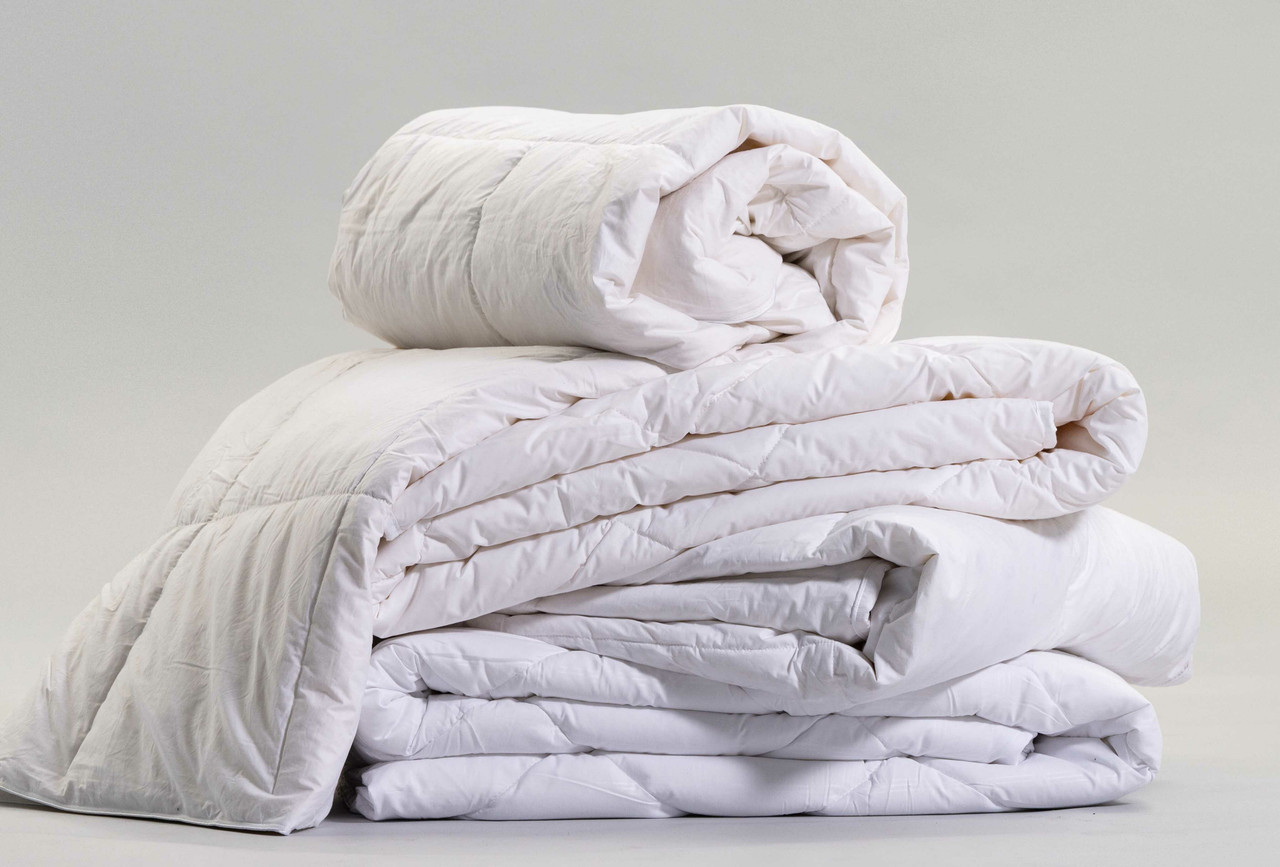
Whether you have a thing for being waited on in full hotel-luxury style or prefer something understated and quietly beautiful, our range has a doona for every vibe. From lightweight summer fills to warmly weighted winter options, each quilt is crafted with the same attention to quality that Canningvale has brought to Australian bedrooms for over 45 years.
Shopping for doonas in Australia means navigating a wide range of fills, weights, and materials. We've made that easy. Our collection covers every need - natural fills for breathability and temperature regulation, synthetic options for allergy sufferers, and everything in between. Whatever your sleep style, there's a quilt here that will become your heart's desire.
All Canningvale quilts are available online with free shipping on orders over $149, backed by our 5-year warranty and 30-day free returns. Afterpay and Zip are available.
---
## Doonas & Quilts in Every Size
Finding the right fit is the first step to a great night's sleep. Our range covers every standard Australian bed size, so you never have to compromise.
- Single bed doona - cosy, perfectly proportioned, ideal for kids and solo sleepers
- Double doona - generous coverage for a double bed without the bulk
- Queen quilt - our most popular size, combining coverage and comfort in equal measure
- King doona - expansive warmth for larger beds, no more tug of war
- Super king doona - the ultimate in luxurious, uncrowded sleeping space
Each size is available across multiple fill weights, so you can choose the warmth level that suits your climate and sleep preference. Canningvale also offers king duvet and queen duvet options crafted for those who want a more tailored, European-inspired look and feel.
---
## Buy Quilts Online - Quality You Can Feel From the First Night
When you buy quilts online, you're making a decision based on trust. At Canningvale, we've spent over four decades earning exactly that. Our bed quilts are constructed from carefully selected materials, finished to exacting standards, and tested to perform night after night, season after season.
Every doona in our range is covered by our Happiness Guarantee - [free returns within 30 days](/30-day-free-trial/), a 5-year manufacturer's warranty, and over [15,000 five-star reviews](/reviews/) from Australian customers who've already made the switch to Canningvale comfort.
These aren't quilts you replace every couple of years. They're quilts you keep, wash, love, and reach for every single night. That's the [Canningvale](/about/) difference - and it's why Australians have trusted us with their bedrooms for generations.
Shop our full range of doonas and quilts online today.
---
## What Is the Difference Between a Quilt, Doona and Duvet?
In Australia, the words quilt, doona, and duvet are used interchangeably - and for good reason, they all refer to the same thing: a filled, quilted bed covering designed to keep you warm while you sleep. The word "doona" is uniquely Australian, believed to derive from the Scandinavian word for down, and has become the everyday term most Australians use at home. "Duvet" tends to be used more in a European or hospitality context, while "quilt" is the most universally understood term across all age groups and regions.
At Canningvale, we use all three terms because our customers search for all three - but rest assured, they're all pointing to the same category of beautifully made bed covering.
---
## How to Choose the Right Doona for Your Climate
Australia's climate varies enormously, and the right doona for a Melbourne winter is very different from what works in Brisbane year-round. Here's a simple guide:
- Lightweight (250–350gsm): ideal for warmer climates, summer use, or warm sleepers in temperate regions
- Medium weight (400–500gsm): the most versatile option, suitable for most Australian climates across spring and autumn
- Heavyweight (550gsm+): best suited to cold climates, including Victoria, Tasmania, South Australia, and the alpine regions of NSW
Fill type also matters. Natural fills such as wool, down, and cotton are breathable and excel at temperature regulation - they keep you warm without overheating. Synthetic fills are a practical choice for allergy sufferers and are typically easier to care for at home.
---
## Why a Quality Quilt Is Worth Investing In
A good quilt is one of the most used items in your entire home. The average Australian spends around seven to nine hours in bed each night - meaning your doona is in use for roughly a third of your life. That makes it one of the most worthwhile investments you can make in your own comfort and wellbeing.
Cheap quilts tend to lose their loft, bunch unevenly, and deteriorate after repeated washing. A quality bed quilt, properly cared for, should last between eight and ten years while maintaining its shape, warmth, and feel throughout. Canningvale's doonas are built with exactly that longevity in mind, backed by a 5-year manufacturer's warranty and made from materials chosen to perform over the long term.
When you're shopping for quilts online in Australia, the difference between a quilt that lasts a season and one that lasts a decade comes down to the quality of the fill, the integrity of the stitching, and the reputation of the brand behind it.
Quilts & Doonas
Quilts & Doonas
Money can't buy love, but it can buy 5-star comfort. Canningvale's quilts and doonas are designed to be the heart of your bedroom - the piece you reach for every night, the one that never lets you run too hot or cold, and the one you genuinely look forward to climbing into.
Filters
Sort By
Filters
Products are loading...
Filters
Sort By
Frequently Asked Questions
What thread count should the outer shell of a doona have?
The outer shell of a doona affects both its feel and its breathability. A tighter weave shell (300 thread count and above) is better at containing fine down fill and feels smoother to the touch. A more open weave suits synthetic or wool fills and allows greater airflow. For most Australian sleepers, a mid-weight cotton shell with a thread count of 233-300 offers the best balance of softness, durability, and breathability.
Can a doona help with night sweats?
Yes, fill choice plays a significant role. Wool fill is particularly effective for people who experience night sweats, as it actively wicks moisture away from the body while maintaining warmth. Down and cotton fills are also breathable, making them far better options than synthetic fills for those who sweat during sleep. If night sweats are a regular issue, pairing a naturally filled doona with moisture-wicking sheets will make a noticeable difference to sleep quality.
Are doonas suitable for babies and young children?
Doonas and quilts are generally not recommended for infants under 12 months due to the risk of suffocation. For toddlers and older children, a lightweight doona in a single size is appropriate, provided it fits the bed correctly and does not bunch around the face. Safe sleep guidelines recommend keeping filling lightweight and ensuring the child's sleeping environment is free of excess bedding. Always follow the current guidelines from Red Nose Australia for infant sleep safety.
What is baffle box construction, and why does it matter?
Baffle box construction refers to the internal stitching pattern of a doona, where fabric walls are sewn between the top and bottom layers to create three-dimensional boxes. This allows the fill to expand fully and distribute evenly across the entire doona, eliminating cold spots. A doona without baffle box construction - known as sewn-through - compresses the fill at the stitch lines, which can reduce warmth in those areas over time. For premium warmth and even coverage, baffle box construction is the superior choice.
Can I use a doona without a quilt cover?
Technically, yes, but it's not recommended for everyday use. Without a cover, your doona is exposed directly to body oils, sweat, and dust mites, requiring much more frequent washing. Repeated washing accelerates wear on the outer shell and can degrade the fill over time. A quilt cover acts as a protective barrier, keeping your doona cleaner for longer and dramatically reducing how often it needs a full wash - typically down to two or three times per year with regular cover changes.
Do wool doonas smell, and is that normal?
A faint natural lanolin scent is common in new wool doonas and is completely normal. It typically dissipates within a few days of airing. To speed up the process, hang your new wool doona outside in fresh air and indirect sunlight for a few hours before first use. If the smell persists beyond a week of regular airing, contact the retailer. A strong or unusual odour that develops after washing may indicate the doona was not dried thoroughly enough before storage.
How do I revive a flat or clumped doona?
Over time, doona fill can compress and lose its loft, particularly after washing. To restore it: - Tumble dry on low heat with two or three clean tennis balls, which physically break up clumped fill - Remove periodically during drying and shake vigorously to redistribute fill - Air outside on a dry, breezy day to allow the fill to breathe and expand naturally - Avoid storing a compressed doona for long periods, as this permanently reduces loft If the loft does not return after these steps, the fill has likely reached the end of its useful life, and replacement is worth considering.